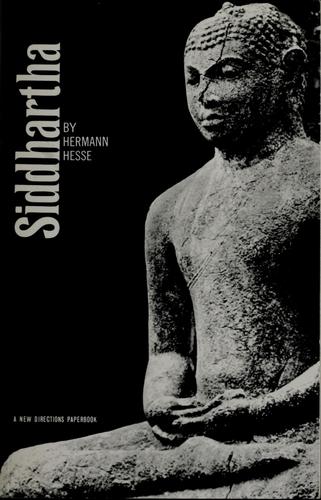
Siddhartha
Hermann Hesse (1922)
“A Brahmin's son walks away from everything — family, religion, love, wealth — in search of a self that cannot be taught.”
Characters in Siddhartha
by Hermann Hesse · 1922 · 7 characters analyzed
Cast: Siddhartha, Govinda, Kamala, Kamaswami, Vasudeva, The River, Siddhartha's Son.
Character Analysis
The novel's great achievement is that Siddhartha is not particularly likable for most of the book — he is gifted, detached, slightly arrogant, and emotionally unavailable. He watches life rather than living it. What makes him compelling is his complete honesty: he never pretends to have found what he hasn't found, never accepts a teacher's doctrine simply because the doctrine is beautiful. The transformation at the river is earned precisely because of how long and how honestly he fails.
Speech shifts with each phase — formal and philosophical as a Brahmin, spare and impersonal as a Samana, worldly and assured with Kamala, and finally simple, direct, and patient as a ferryman. Each register is authentic to that phase.