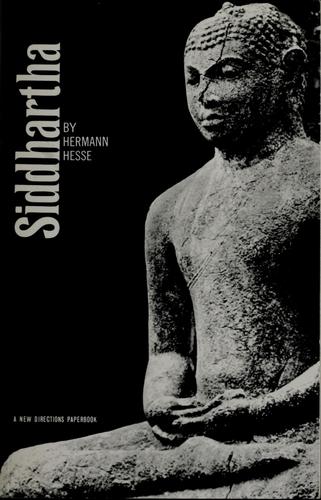
Siddhartha
Hermann Hesse (1922)
“A Brahmin's son walks away from everything — family, religion, love, wealth — in search of a self that cannot be taught.”
For Students
Because it asks the question every high school student is actually asking: who am I when I stop being what everyone expects me to be? Siddhartha leaves his family's expectations, tries three or four different paths to identity, nearly destroys himself, and finally finds something real — not through a teacher or a doctrine, but through listening. At 152 pages, it's short enough to finish. At any page, it's deep enough to think about for a week.
For Teachers
One of the most efficient texts for teaching world religion concepts (Hindu, Buddhist, and Jungian frameworks all present), comparative philosophy, the bildungsroman form, and close reading of prose as philosophical argument. The meditative style invites discussion of how form and content relate. The chapter structure maps cleanly onto distinct philosophical phases — each chapter is almost a unit in itself.
Why It Still Matters
The pressure to find yourself through your college major, your career, your relationship, your Instagram aesthetic — Siddhartha tried all of it and found the same thing every time: the self you're looking for is not at the destination. The river already knows this. The novel's argument is not that Eastern philosophy is superior to Western materialism; it's that no external system can substitute for the specific experience of your own life, fully lived and fully suffered. That's not a 1922 argument. That's permanent.