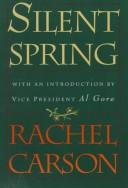
Silent Spring
Rachel Carson (1962)
“A marine biologist dying of cancer wrote the book that killed DDT, launched the environmental movement, and proved that one careful voice could take on an entire industry — and win.”
At a Glance
Rachel Carson meticulously documents how synthetic pesticides — particularly DDT — are poisoning the natural world, contaminating water, killing birds and fish, and threatening human health. Drawing on years of scientific research, government reports, and firsthand accounts, Carson argues that the chemical industry and the government agencies meant to regulate it have created an ecological catastrophe through ignorance, arrogance, and profit motive. The book opens with a fable of a poisoned town and closes with a call for biological alternatives to chemical warfare against nature. It changed the world.
Read full summary →Why This Book Matters
Silent Spring is arguably the most consequential work of nonfiction published in the twentieth century. It did not merely document an environmental crisis — it created the intellectual and political framework within which environmental crises could be understood, debated, and addressed. Before Carson, there was no 'environmental movement' in the modern sense. The concept of ecology as a public concern, the idea that industrial activities could have systemic environmental consequences, the principle that government had a responsibility to protect natural systems — all of these ideas existed in specialized scientific circles, but Carson brought them to the American public in a form that could not be ignored.
Diction Profile
Elevated but accessible — Carson writes with the precision of a research scientist and the grace of a literary essayist. Her vocabulary ranges from molecular chemistry to pastoral description, and the transitions between registers are seamless. The prose never condescends and never obscures.
Moderate and precisely controlled. Carson uses metaphor and imagery when they serve the argument