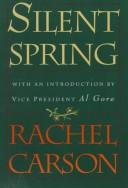
Silent Spring
Rachel Carson (1962)
“A marine biologist dying of cancer wrote the book that killed DDT, launched the environmental movement, and proved that one careful voice could take on an entire industry — and win.”
Silent Spring— Summary & Analysis
by Rachel Carson · published 1962 · 368 pages · Contemporary
A user-friendly study guide for Silent Spring by Rachel Carson (1962): a high-level plot summary, full chapter-by-chapter analysis, theme breakdowns, character profiles, and 30 essay questions designed for high-school, ap-english, college readers. Unlike a stock summary, sumsumsum.com adds a diction analysis drawn from Rachel Carson’s actual text, the 4 documented AP Literature exam appearances of this book, and reading-difficulty guidance (Easy, 3/10) so students, teachers, and lifelong readers know what they are walking into.
“A marine biologist dying of cancer wrote the book that killed DDT, launched the environmental movement, and proved that one careful voice could take on an entire industry — and win.”
Short Summary
Rachel Carson meticulously documents how synthetic pesticides — particularly DDT — are poisoning the natural world, contaminating water, killing birds and fish, and threatening human health. Drawing on years of scientific research, government reports, and firsthand accounts, Carson argues that the chemical industry and the government agencies meant to regulate it have created an ecological catastrophe through ignorance, arrogance, and profit motive. The book opens with a fable of a poisoned town and closes with a call for biological alternatives to chemical warfare against nature. It changed the world.
Detailed Summary
Silent Spring begins with a fable — 'A Fable for Tomorrow' — describing an American town where spring arrives without birdsong, where orchards bear no fruit because there are no bees to pollinate them, where children sicken and die. Carson then reveals: every disaster in the fable has already happen...
Chapter-by-Chapter Analysis
If you liked Silent Spring, read next
Start with Walden by Henry David Thoreau — The foundational text of American nature writing — Thoreau's contemplative relationship with nature set the literary template that Carson inherited and transformed into activism.. Then try The Jungle by Upton Sinclair — The most direct precedent for Silent Spring as investigative nonfiction that changed federal policy — Sinclair exposed the meatpacking industry, Carson exposed the chemical industry, both faced ferocious industry counterattacks.. Or pivot to Into the Wild by Jon Krakauer — A different relationship between humans and nature — where Carson argues for understanding nature's complexity, McCandless sought to lose himself in it. The contrast illuminates what 'nature writing' can mean..