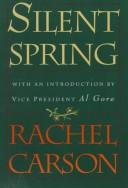
Silent Spring
Rachel Carson (1962)
“A marine biologist dying of cancer wrote the book that killed DDT, launched the environmental movement, and proved that one careful voice could take on an entire industry — and win.”
Characters in Silent Spring
by Rachel Carson · 1962 · 6 characters analyzed
Cast: Rachel Carson, DDT, The Chemical Industry, The Field Scientists, The Natural World, President John F. Kennedy.
Character Analysis
Carson is not a character in the conventional sense — she is the authorial intelligence that organizes the book's argument. But her presence is felt on every page: in the precision of the scientific documentation, the beauty of the natural descriptions, the controlled fury of the institutional critique. She is a scientist who writes like a poet and argues like a prosecutor. She never raises her voice, never resorts to ad hominem, never descends to the level of her attackers. The discipline of her prose is itself an argument: this is what rational, evidence-based discourse looks like.
Carson gives DDT a narrative presence that goes beyond its molecular structure. It is introduced with a genealogy (wartime chemical weapons research), given a biography (development, deployment, persistence), and traced through its actions (contamination, accumulation, killing). By treating DDT as an agent with a history and a set of behaviors, Carson makes visible what the chemical industry wanted to keep abstract. DDT is not a 'crop protection product.' It is a persistent poison with a trajectory that ends in the tissues of every living thing.
Carson does not personify the chemical industry through individual villains — she presents it as a system with its own logic, its own incentives, and its own capacity for self-deception. The industry believed it was feeding the world. Carson showed it was poisoning the world. The gap between the industry's self-image and Carson's evidence is the book's central dramatic tension.
Carson quotes industry representatives and their published materials — the language of public relations, of reassurance, of 'safety when used as directed.' She lets the corporate voice speak, then places it against the evidence of what actually happened.
Throughout the book, Carson amplifies the voices of researchers who saw the damage firsthand and could not get their findings into public view. Ornithologists who counted dead robins. Fisheries biologists who documented salmon kills. Government scientists whose reports were suppressed. These figures function in the book the way witnesses function in a trial: they provide the testimony that the prosecution assembles into a case.
Carson quotes extensively from researchers in the field — biologists, ornithologists, entomologists who witnessed the damage firsthand. Their language is specific, empirical, often anguished. They describe dead birds, poisoned streams, collapsed populations.
Nature in Silent Spring is not a backdrop or a setting. It is the protagonist — the complex, interconnected, self-regulating system that human intervention is destroying. Carson describes ecosystems with the intimacy of someone who has spent decades observing them: the robin's feeding habits, the salmon's lifecycle, the soil's microbial universe. The natural world in Silent Spring has agency, complexity, and beauty. Its destruction is not collateral damage. It is the central crime.
Kennedy does not appear in the book itself, but his response to it is part of the book's significance. After reading Silent Spring, Kennedy ordered his Science Advisory Committee to investigate Carson's claims. Their report, published in May 1963, vindicated her on virtually every point. Kennedy's decision to take the book seriously — rather than dismissing it as the industry demanded — transformed it from a bestseller into a policy document.