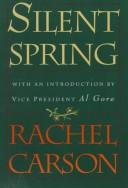
Silent Spring
Rachel Carson (1962)
“A marine biologist dying of cancer wrote the book that killed DDT, launched the environmental movement, and proved that one careful voice could take on an entire industry — and win.”
Language Register
Elevated but accessible — Carson writes with the precision of a research scientist and the grace of a literary essayist. Her vocabulary ranges from molecular chemistry to pastoral description, and the transitions between registers are seamless. The prose never condescends and never obscures.
Syntax Profile
Complex but never convoluted. Carson builds long, balanced sentences with multiple subordinate clauses — the syntax of careful qualification, of a scientist who distinguishes between what is proven and what is indicated. But she also deploys short, declarative sentences for emphasis at critical moments. The variation in sentence length is one of her primary rhetorical tools: complexity builds the argument, brevity delivers the verdict.
Figurative Language
Moderate and precisely controlled. Carson uses metaphor and imagery when they serve the argument — the 'silent spring,' the 'elixirs of death,' the 'other road' — but never at the expense of scientific accuracy. Her most powerful figurative language tends to be structural rather than ornamental: the opening fable is an extended metaphor, the chapter organization follows the path of contamination through ecosystems. The restraint in figurative language is itself an argument: the facts are horrifying enough without embellishment.
Era-Specific Language
The most widely used synthetic pesticide of the postwar era, persistent in the environment for decades, accumulating in fatty tissue up the food chain
The chemical family including DDT, chlordane, heptachlor, dieldrin — persistent organic pollutants that do not break down naturally
The process by which chemical concentrations increase at each level of the food chain — parts per billion in water become parts per million in fish tissue
United States Department of Agriculture — simultaneously promoting pesticide use and responsible for evaluating pesticide safety
Government campaigns to eliminate specific pest species across large geographic areas through blanket chemical spraying — Carson's primary targets
How Characters Speak — Class & Identity
Rachel Carson (authorial voice)
Writes from the position of an educated scientist speaking to an educated public — never talks down, never uses jargon without explanation, assumes the reader is intelligent and willing to follow an argument. The voice is authoritative but not authoritarian.
Carson came from modest origins in rural Pennsylvania but earned a master's degree in zoology from Johns Hopkins and worked as a marine biologist for the U.S. Fish and Wildlife Service. Her prose reflects a woman who earned her authority through mastery, not inheritance — every claim is supported, every assertion backed by evidence.
The Chemical Industry
Carson quotes industry representatives and their published materials — the language of public relations, of reassurance, of 'safety when used as directed.' She lets the corporate voice speak, then places it against the evidence of what actually happened.
The industry voice is the voice of power that does not expect to be questioned. It speaks in generalities where Carson speaks in specifics. It invokes 'progress' and 'modern agriculture' as unquestionable goods. Carson makes the reader hear the gap between the rhetoric and the reality.
The Field Scientists
Carson quotes extensively from researchers in the field — biologists, ornithologists, entomologists who witnessed the damage firsthand. Their language is specific, empirical, often anguished. They describe dead birds, poisoned streams, collapsed populations.
These are the voices the regulatory system was designed to hear and chose to ignore. Carson amplifies them — gives them a platform in a bestselling book that they could not find in government reports. Their specificity and their distress are her evidence.
Narrator's Voice
Carson: controlled, authoritative, morally engaged but scientifically disciplined. She does not conceal her outrage, but she channels it through evidence rather than rhetoric. The voice is that of a scientist who has seen something terrible and is determined to make others see it too — clearly enough that they cannot look away, precisely enough that they cannot dismiss what they see.
Tone Progression
The Fable (Chapter 1)
Pastoral, then ominous
Beauty described in full before its destruction. The shift from Eden to wasteland is swift and deliberate — the reader feels the loss.
The Evidence (Chapters 2-9)
Prosecutorial, methodical, cumulative
Case study upon case study, each one adding weight. The tone is that of a prosecutor building an overwhelming case — each chapter is a new charge in the indictment.
The Human Cost (Chapters 10-13)
Urgent, controlled, personally charged
The stakes become personal — human bodies, human children. Carson's restraint here is most visible because she is writing about what is killing her.
The Alternative (Chapters 16-17)
Visionary, measured, hopeful without naivete
The damage is documented. Now Carson turns to what could be done instead. The tone lifts — not into optimism but into possibility.
Stylistic Comparisons
- Henry David Thoreau's Walden — both combine precise natural observation with moral argument, but Carson's is directed outward, at industry and policy, while Thoreau's is directed inward, at the individual soul
- Upton Sinclair's The Jungle — both are works of investigative nonfiction that changed federal policy. Sinclair relied on shock; Carson relied on accumulated scientific evidence. Both were attacked by the industries they exposed
- John McPhee — similar commitment to making complex science accessible through elegant prose, but Carson's work carries a moral urgency that McPhee's deliberately avoids
Key Vocabulary from This Book
Notable words used in this text — click to see full definitions