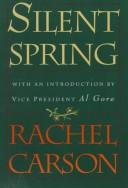
Silent Spring
Rachel Carson (1962)
“A marine biologist dying of cancer wrote the book that killed DDT, launched the environmental movement, and proved that one careful voice could take on an entire industry — and win.”
Similar Books
Thematic connections across eras and genres — books that talk to each other.
Walden
Henry David Thoreau
The foundational text of American nature writing — Thoreau's contemplative relationship with nature set the literary template that Carson inherited and transformed into activism.
The Jungle
Upton Sinclair
The most direct precedent for Silent Spring as investigative nonfiction that changed federal policy — Sinclair exposed the meatpacking industry, Carson exposed the chemical industry, both faced ferocious industry counterattacks.
Into the Wild
Jon Krakauer
A different relationship between humans and nature — where Carson argues for understanding nature's complexity, McCandless sought to lose himself in it. The contrast illuminates what 'nature writing' can mean.
The Grapes of Wrath
John Steinbeck
Steinbeck's Dust Bowl novel shares Carson's concern with what happens when agriculture ignores ecology — both books document the human cost of treating the land as a resource to be exploited rather than a system to be sustained.
Narrative of the Life of Frederick Douglass
Frederick Douglass
Both are works by individuals from marginalized positions who used the power of precise, evidence-based writing to challenge entrenched systems of power — and both were attacked personally rather than answered substantively.
The Road
Cormac McCarthy
McCarthy's post-apocalyptic novel imagines the world Carson's fable warns about — a world where the web of life has collapsed and nothing grows. Silent Spring is the warning; The Road is what happens if the warning is ignored.