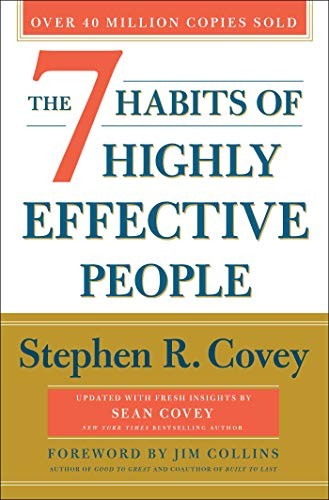
The 7 Habits of Highly Effective People
Stephen R. Covey (1989)
“Covey argues that true effectiveness begins not with techniques or tricks but with a fundamental shift in character — from dependence to independence to interdependence — and that the principles governing this shift are as immutable as the laws of physics.”
At a Glance
Stephen Covey's landmark book presents seven habits organized along a maturity continuum from dependence to independence to interdependence. The first three habits (be proactive, begin with the end in mind, put first things first) address personal mastery; the next three (think win-win, seek first to understand, synergize) address interpersonal effectiveness; and the seventh (sharpen the saw) addresses continuous renewal. Covey argues that lasting effectiveness requires a character-based ethic grounded in universal principles, not the personality-based shortcuts of the modern self-help industry.
Read full summary →Why This Book Matters
The 7 Habits of Highly Effective People transformed the self-help genre by reintroducing philosophical depth and character ethics to a field that had become dominated by personality techniques and quick fixes. It is one of the best-selling nonfiction books of the twentieth century and has influenced management theory, leadership development, and personal development worldwide. Its concepts — proactivity, the Time Management Matrix, the Abundance Mentality, empathic listening, synergy — have entered the common vocabulary of business and personal development.
Diction Profile
Moderate to high. Covey uses formal vocabulary and careful sentence construction but avoids academic jargon. His paragraphs are well-organized, his arguments are logically structured, and his tone is consistently earnest and authoritative. He writes with more gravitas than Carnegie and more clarity than Hill.
Moderate. Covey's metaphors are functional rather than poetic