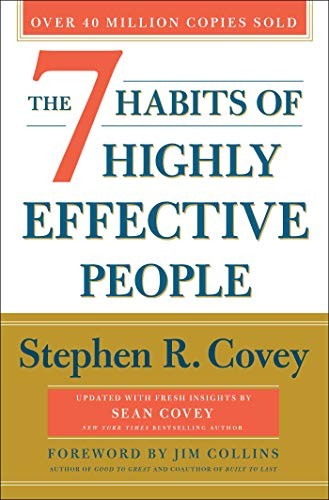
The 7 Habits of Highly Effective People
Stephen R. Covey (1989)
“Covey argues that true effectiveness begins not with techniques or tricks but with a fundamental shift in character — from dependence to independence to interdependence — and that the principles governing this shift are as immutable as the laws of physics.”
For Students
The 7 Habits provides a comprehensive framework for personal effectiveness that is directly applicable to academic success, career preparation, and relationship building. The habits of proactivity, prioritization, empathic listening, and continuous renewal are immediately useful for students navigating the demands of school, work, and social life. The book also provides an accessible introduction to philosophical concepts — paradigms, character ethics, the nature of freedom — that students will encounter in more formal contexts later.
For Teachers
The book offers a rich framework for teaching ethics, leadership, communication, and critical thinking. Its distinction between Character Ethic and Personality Ethic provides a lens for analyzing American culture and the self-help industry. The Time Management Matrix is a practical tool for helping students prioritize their commitments. And the empathic listening framework provides a model for productive classroom discussion and conflict resolution.
Why It Still Matters
In an era of increasing polarization, decreasing trust in institutions, and growing anxiety about the future, Covey's emphasis on character, empathy, and principle-centered living is more relevant than ever. The habits of seeking first to understand, thinking win-win, and valuing differences provide a practical alternative to the zero-sum thinking that dominates contemporary public discourse. The book endures because the problems it addresses — how to live with integrity, how to relate to others with respect, how to balance competing demands — are permanent features of the human condition.