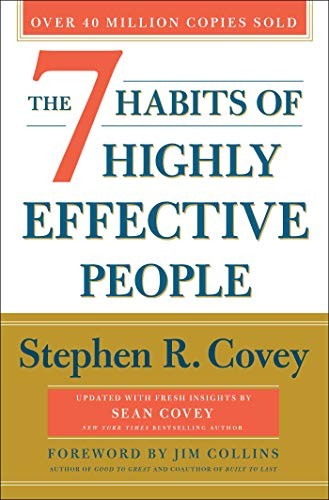
The 7 Habits of Highly Effective People
Stephen R. Covey (1989)
“Covey argues that true effectiveness begins not with techniques or tricks but with a fundamental shift in character — from dependence to independence to interdependence — and that the principles governing this shift are as immutable as the laws of physics.”
Similar Books
Thematic connections across eras and genres — books that talk to each other.
Covey explicitly builds on and critiques Carnegie's work, arguing that Carnegie's personality-based approach needs a foundation of character to produce lasting results
Think and Grow Rich
Napoleon Hill
Hill and Covey share the conviction that internal states (mindset for Hill, character for Covey) determine external results, but Covey replaces Hill's metaphysical claims with a more grounded philosophical framework
Man's Search for Meaning
Viktor Frankl
Frankl's existential philosophy provides the intellectual foundation for Covey's concept of proactivity — the idea that between stimulus and response lies the freedom to choose
Atomic Habits
James Clear
Clear's habit science provides the behavioral mechanics that Covey's philosophical framework lacks — how habits are actually formed, maintained, and changed at the neurological level
The Effective Executive
Peter F. Drucker
Drucker's management classic influenced Covey's distinction between efficiency and effectiveness, and his emphasis on results over activity
Emotional Intelligence
Daniel Goleman
Goleman provides the neuroscience behind Covey's empathic listening and emotional bank account concepts, showing that emotional skills are measurable and developable