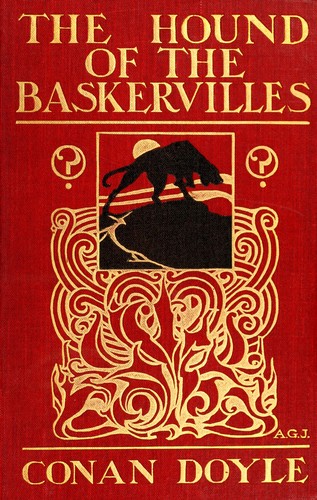
The Hound of the Baskervilles
Arthur Conan Doyle (1902)
“A spectral hound haunts an aristocratic family on the Devon moors -- and Sherlock Holmes must decide whether the danger is supernatural or terrifyingly human.”
Characters in The Hound of the Baskervilles
by Arthur Conan Doyle · 1902 · 9 characters analyzed
Cast: Sherlock Holmes, Dr. John Watson, Sir Henry Baskerville, Dr. James Mortimer, Jack Stapleton, Beryl Stapleton, Mr. and Mrs. Barrymore, Laura Lyons, Selden.
Character Analysis
Holmes is physically absent from the middle third of the novel, and this absence is the book's most radical structural choice. When present, he is the familiar figure -- brilliant, austere, epigrammatic. But Doyle reveals something new: Holmes is not immune to the moor. He concedes its power, calls it 'a worthy setting' for the devil's work, and admits the case tested him environmentally if not intellectually. The Hound humanizes Holmes more than any short story because it shows him operating at the edge of his method's range.
Precise, analytical, epigrammatic. Avoids emotional vocabulary. Uses scientific and legal terminology. Commands through certainty rather than authority.