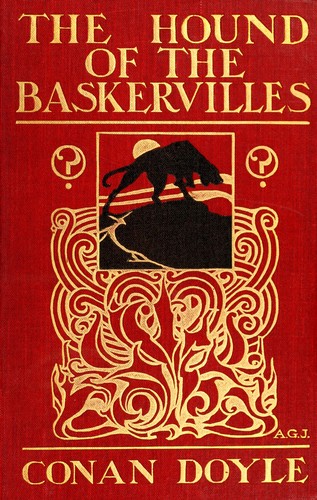
The Hound of the Baskervilles
Arthur Conan Doyle (1902)
“A spectral hound haunts an aristocratic family on the Devon moors -- and Sherlock Holmes must decide whether the danger is supernatural or terrifyingly human.”
For Students
Because it teaches you how to read -- not just stories, but evidence. Every chapter trains you to notice what Watson notices and then ask what Watson misses. The novel is a 256-page exercise in critical thinking disguised as a ghost story. It is also genuinely scary, which is more than most assigned reading can claim. And at difficulty level 2, the Victorian prose is accessible -- this is not Dickens or Hardy. Doyle wrote for a mass audience and his sentences move.
For Teachers
A perfect bridge text: accessible enough for middle school, rich enough for AP analysis. The Gothic-vs-rational tension supports units on genre, epistemology, and narrative reliability. Watson's limited perspective teaches narrator analysis without the difficulty of modernist unreliability. The class dynamics open discussions about Victorian social structure that connect to contemporary inequality. And the novel's structure -- detective present, detective absent, detective returns -- is a masterclass in pacing that students can diagram and replicate.
Why It Still Matters
Every conspiracy theory, every viral hoax, every 'unexplained' phenomenon on social media is the Baskerville hound -- something terrifying that has a rational explanation nobody wants to hear because the fear is more exciting than the truth. Holmes' method -- observe, hypothesize, test, explain -- is the scientific method, and the novel's argument that rational thinking defeats manufactured terror is more relevant in 2026 than it was in 1902. The moor is the internet: vast, foggy, full of howling, and navigable only if you refuse to panic.