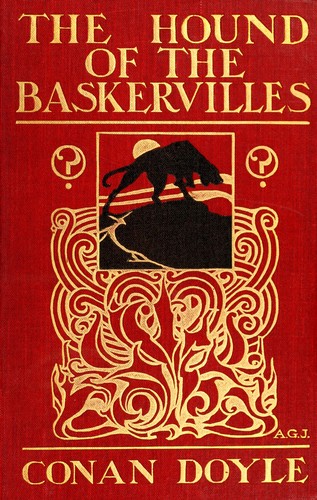
The Hound of the Baskervilles
Arthur Conan Doyle (1902)
“A spectral hound haunts an aristocratic family on the Devon moors -- and Sherlock Holmes must decide whether the danger is supernatural or terrifyingly human.”
Why This Book Matters
The Hound of the Baskervilles is the most famous detective novel in the English language and the work that cemented Sherlock Holmes as a permanent cultural figure. Published serially in The Strand Magazine from August 1901 to April 1902, it was so anticipated that queues formed at newsstands for each installment. It proved that Holmes was commercially irreplaceable and led directly to Doyle's full resurrection of the character in 1903. More significantly, it is the first major detective novel to fuse the Gothic horror tradition with the rationalist detective tradition -- proving that the two modes could coexist and that the detective story could sustain novel-length narrative, not just short stories.
Firsts & Innovations
The first Holmes story to sustain genuine novel-length narrative tension (earlier novels like A Study in Scarlet split into separate storylines)
One of the first detective novels to make landscape a central character rather than a backdrop
Pioneered the structural experiment of removing the detective from the middle of his own story, forcing the reader to share the sidekick's limitations
Cultural Impact
Over 25 film and television adaptations, from 1921 silent film to 2012 BBC Sherlock
The 'spectral hound' became a permanent archetype in mystery and horror fiction
Dartmoor tourism increased permanently -- Baskerville Hall, the Grimpen Mire, and the stone huts are mapped onto real locations
Influenced every subsequent detective novel that uses atmospheric setting as a narrative force -- from Agatha Christie's Devon mysteries to modern Scandinavian noir
The phrase 'elementary, my dear Watson' (though never actually appearing in Doyle's text) became the most recognized quotation in detective fiction
Banned & Challenged
Rarely banned or challenged, though some school districts have questioned its suitability for younger readers due to violence (Selden's death, the hound's attack) and the novel's genuinely frightening atmosphere. Occasionally challenged by religious groups for its treatment of superstition -- ironically, both for taking the supernatural too seriously and for dismissing it too readily.