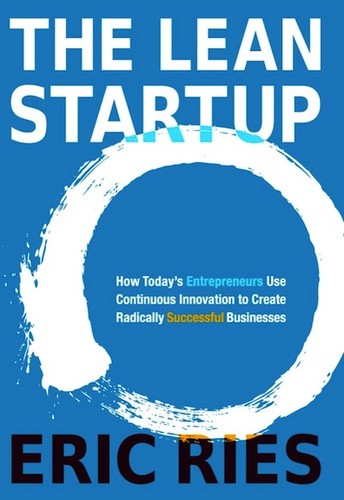
The Lean Startup
Eric Ries (2011)
“A Silicon Valley entrepreneur argues that startups are not smaller versions of large companies — they are experiments, and the ones that succeed are those that learn fastest what customers actually want.”
At a Glance
Eric Ries proposes a scientific approach to creating and managing startups by applying lean manufacturing principles to entrepreneurship. The core framework — Build-Measure-Learn — treats every product launch as a hypothesis to be tested, every customer interaction as data to be analyzed, and every strategic decision as an experiment to be validated. The book argues that most startups fail not because they can't build products but because they build products nobody wants, and that the antidote is rapid iteration guided by validated learning rather than elaborate planning.
Read full summary →Why This Book Matters
The Lean Startup transformed how entrepreneurs, investors, and organizations think about innovation. It provided a common vocabulary (MVP, pivot, validated learning) and a systematic methodology for reducing the waste inherent in building new products under uncertainty. Its influence extends far beyond Silicon Valley into corporate innovation, government, education, and nonprofit sectors.
Diction Profile
Moderately informal. Ries uses first-person anecdotes, conversational asides, and direct address, but maintains the structural formality of a management book — defined terms, numbered frameworks, and systematic argument. The informality comes from personal experience; the formality comes from the desire to be taken seriously as a management thinker.
Low to moderate. Ries relies more on concrete case studies than on metaphor. When figurative language appears, it draws on scientific and mechanical metaphors