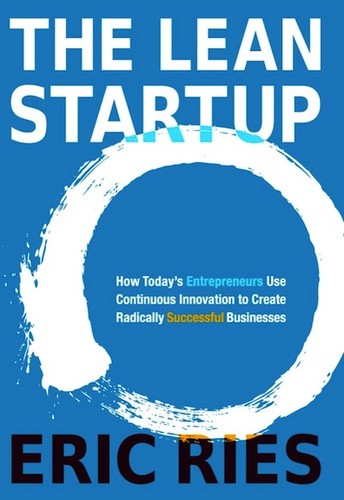
The Lean Startup
Eric Ries (2011)
“A Silicon Valley entrepreneur argues that startups are not smaller versions of large companies — they are experiments, and the ones that succeed are those that learn fastest what customers actually want.”
Similar Books
Thematic connections across eras and genres — books that talk to each other.
Zero to One
Peter Thiel
Thiel offers a contrasting philosophy — build a monopoly through a unique, visionary product rather than iterating toward what customers want. The two approaches represent different theories of how breakthrough innovation happens.
The Four Steps to the Epiphany
Steve Blank
Blank's customer development model is the direct intellectual ancestor of the lean startup. Ries acknowledges Blank as a mentor and builds on his framework with the Build-Measure-Learn loop.
The Innovator's Dilemma
Clayton Christensen
Christensen explains why established companies fail to innovate; Ries provides a methodology for how startups (and innovators within large companies) can succeed. Together they provide a complete theory of innovation and disruption.
Crossing the Chasm
Geoffrey Moore
Moore addresses the challenge of moving from early adopters to mainstream market — the stage that follows the lean startup's validated learning phase. The two books cover complementary stages of company growth.
Start with Why
Simon Sinek
Sinek argues that companies succeed by starting with purpose; Ries argues they succeed by starting with experiments. The two perspectives are complementary — purpose provides direction while experimentation provides validation.
Good to Great
Jim Collins
Collins studies how established companies achieve sustained excellence through discipline and focus — similar principles to the lean startup but applied to mature organizations rather than nascent ones.