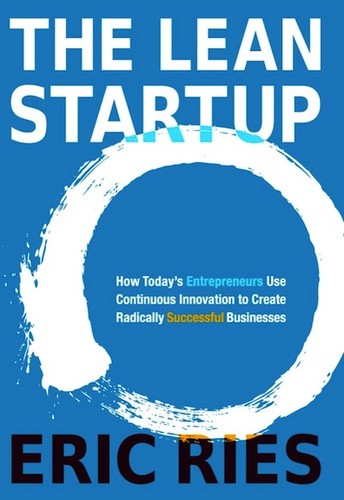
The Lean Startup
Eric Ries (2011)
“A Silicon Valley entrepreneur argues that startups are not smaller versions of large companies — they are experiments, and the ones that succeed are those that learn fastest what customers actually want.”
The Lean Startup— Literary & Historical Significance
Why This Book Matters
The Lean Startup transformed how entrepreneurs, investors, and organizations think about innovation. It provided a common vocabulary (MVP, pivot, validated learning) and a systematic methodology for reducing the waste inherent in building new products under uncertainty. Its influence extends far beyond Silicon Valley into corporate innovation, government, education, and nonprofit sectors.
Firsts & Innovations
Systematized the concept of the Minimum Viable Product as a learning tool rather than a product strategy
Introduced 'innovation accounting' as a framework for measuring startup progress
Popularized the concept of the 'pivot' as a structured strategic change rather than a failure or a whim
Applied lean manufacturing principles to knowledge work and entrepreneurship in a comprehensive framework
Cultural Impact
The terms 'MVP,' 'pivot,' and 'validated learning' became standard vocabulary in business worldwide
Influenced the curricula of business schools including Harvard, Stanford, and MIT
Adopted by corporate innovation programs at GE, Intuit, Toyota, and other Fortune 500 companies
Spawned a global movement of Lean Startup meetups, conferences, and consulting practices
Shaped the methodology of major startup accelerators including Y Combinator, Techstars, and 500 Startups
Led to the founding of the Long-Term Stock Exchange, reflecting Ries's ambition to reshape capital markets
Banned & Challenged
Not banned, but the methodology has been criticized on several fronts: that it overemphasizes customer feedback at the expense of visionary products (Steve Jobs famously did not rely on customer research), that the MVP concept can be used to justify shipping low-quality products, that the framework works better for consumer software than for deep technology or hardware, and that the emphasis on speed and iteration can produce a culture of shallow optimization rather than genuine innovation.