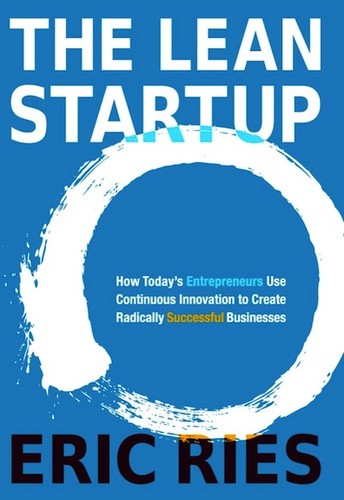
The Lean Startup
Eric Ries (2011)
“A Silicon Valley entrepreneur argues that startups are not smaller versions of large companies — they are experiments, and the ones that succeed are those that learn fastest what customers actually want.”
This page prints on a single page. Use Ctrl+P / Cmd+P.
The Lean Startup
Eric Ries (2011) · 336pages · Contemporary Nonfiction
Summary
Eric Ries proposes a scientific approach to creating and managing startups by applying lean manufacturing principles to entrepreneurship. The core framework — Build-Measure-Learn — treats every product launch as a hypothesis to be tested, every customer interaction as data to be analyzed, and every strategic decision as an experiment to be validated. The book argues that most startups fail not because they can't build products but because they build products nobody wants, and that the antidote is rapid iteration guided by validated learning rather than elaborate planning.
Why It Matters
The Lean Startup transformed how entrepreneurs, investors, and organizations think about innovation. It provided a common vocabulary (MVP, pivot, validated learning) and a systematic methodology for reducing the waste inherent in building new products under uncertainty. Its influence extends far ...
Themes & Motifs
Diction & Style
Register: Moderately informal. Ries uses first-person anecdotes, conversational asides, and direct address, but maintains the structural formality of a management book — defined terms, numbered frameworks, and systematic argument. The informality comes from personal experience; the formality comes from the desire to be taken seriously as a management thinker.
Narrator: Confessional authority — Ries opens with his own failures and builds credibility through vulnerability. He positions ...
Figurative Language: Low to moderate. Ries relies more on concrete case studies than on metaphor. When figurative language appears, it draws on scientific and mechanical metaphors
Historical Context
Post-2008 startup boom and the rise of Silicon Valley as cultural paradigm: The Lean Startup emerged at a moment when starting a software company had never been cheaper or easier, but the failure rate remained stubbornly high. The 2008 financial crisis had discredited elab...
Key Characters
Talking Points
- Ries defines a startup as 'a human institution designed to create a new product or service under conditions of extreme uncertainty.' Why does he emphasize 'extreme uncertainty'? How does this condition change what management practices are appropriate?
- What is the difference between a Minimum Viable Product and a minimal product? Why does Ries insist on the distinction, and what happens when companies confuse the two?
- Ries distinguishes between 'vanity metrics' and 'actionable metrics.' Provide examples of each and explain why vanity metrics can be dangerous for a startup.
- How does the concept of the 'pivot' change the traditional understanding of business failure? Is a pivot a failure, a success, or something else entirely?
- Compare the lean startup methodology with the traditional approach of writing a comprehensive business plan and executing it. What are the strengths and weaknesses of each approach?
Notable Quotes
“A startup is a human institution designed to create a new product or service under conditions of extreme uncertainty.”
“The only way to win is to learn faster than anyone else.”
“The minimum viable product is that version of a new product which allows a team to collect the maximum amount of validated learning about customers...”
Why Read This
The Lean Startup teaches a way of thinking about uncertainty that applies far beyond business — any project where you're building something new under unknown conditions can benefit from the Build-Measure-Learn framework. The emphasis on testing as...