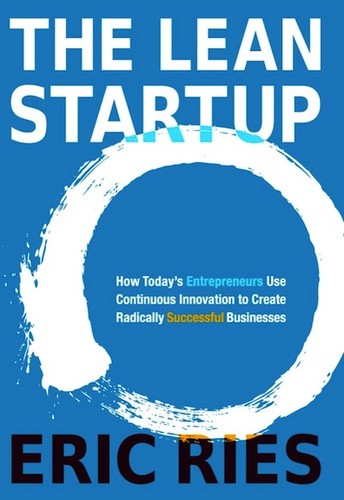
The Lean Startup
Eric Ries (2011)
“A Silicon Valley entrepreneur argues that startups are not smaller versions of large companies — they are experiments, and the ones that succeed are those that learn fastest what customers actually want.”
The Lean Startup— Diction & Style Analysis
Language Register
Moderately informal. Ries uses first-person anecdotes, conversational asides, and direct address, but maintains the structural formality of a management book — defined terms, numbered frameworks, and systematic argument. The informality comes from personal experience; the formality comes from the desire to be taken seriously as a management thinker.
Syntax Profile
Medium-length declarative sentences organized into clearly structured arguments. Ries favors the pattern of assertion-example-principle: make a claim, illustrate it with a case study, then extract the general principle. Paragraphs are focused and purposeful, rarely exceeding five or six sentences.
Figurative Language
Low to moderate. Ries relies more on concrete case studies than on metaphor. When figurative language appears, it draws on scientific and mechanical metaphors — 'engine of growth,' 'feedback loop,' 'hypothesis,' 'experiment.' The metaphorical vocabulary positions entrepreneurship as engineering rather than art.
Era-Specific Language
The simplest version of a product that allows the team to begin learning from customers
A structured course correction designed to test a new fundamental hypothesis
Demonstrable evidence that the team has discovered something true about customers
Metrics that look impressive but don't indicate sustainable progress
The core feedback loop of lean startup methodology
How Characters Speak — Class & Identity
Startup founders
Assumed audience — risk-tolerant, venture-backed, tech-oriented
The book's advice assumes access to capital, technical talent, and a market where rapid iteration is possible — conditions that don't apply to all entrepreneurs
Toyota/lean manufacturing workers
Referenced as intellectual ancestors but not as audience
Ries borrows from blue-collar manufacturing traditions but applies them to white-collar knowledge work, creating a class tension he doesn't fully explore
Corporate innovators
Secondary audience in Part Three
Ries recognizes that his methodology must work within existing power structures, not just in garages — a pragmatic concession to organizational reality
Narrator's Voice
Confessional authority — Ries opens with his own failures and builds credibility through vulnerability. He positions himself as someone who learned the hard way and is now sharing those lessons. This confessional mode is strategic: it makes the prescriptive sections feel earned rather than presumptuous.
Tone Progression
Part One
Confessional and definitional
Ries shares his failures, defines key terms, and establishes the intellectual foundation with the earnestness of a convert.
Part Two
Systematic and case-study-driven
The tone becomes more analytical as Ries presents frameworks, taxonomies, and detailed examples of the methodology in action.
Part Three
Visionary and expansive
Ries broadens the scope to large organizations and management theory, adopting a more aspirational tone about the future of business.
Stylistic Comparisons
- Peter Thiel (Zero to One) — both address startup strategy, but Thiel emphasizes vision and monopoly while Ries emphasizes iteration and learning
- Steve Blank (The Four Steps to the Epiphany) — Blank's customer development model directly preceded and influenced Ries's lean startup; Ries acknowledges Blank as a mentor
- Jim Collins (Good to Great) — Collins studies established company success while Ries studies startup survival; different methodologies (historical case study vs. experimental framework)
- Clayton Christensen (The Innovator's Dilemma) — both address innovation under uncertainty, but Christensen explains why incumbents fail while Ries proposes how startups can succeed