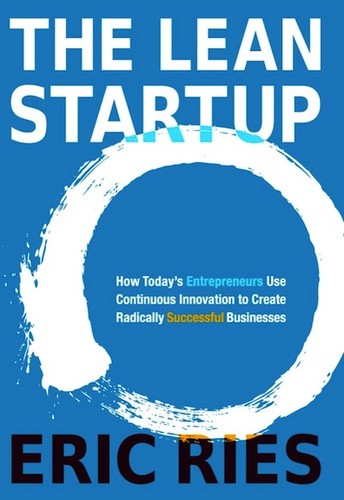
The Lean Startup
Eric Ries (2011)
“A Silicon Valley entrepreneur argues that startups are not smaller versions of large companies — they are experiments, and the ones that succeed are those that learn fastest what customers actually want.”
For Students
The Lean Startup teaches a way of thinking about uncertainty that applies far beyond business — any project where you're building something new under unknown conditions can benefit from the Build-Measure-Learn framework. The emphasis on testing assumptions before committing resources is a valuable intellectual discipline whether you're launching a startup, designing a research project, or planning a career.
For Teachers
This book provides a framework for teaching entrepreneurship and innovation that is systematic, evidence-based, and applicable across industries. It can be used in business courses, engineering design classes, and any curriculum that addresses problem-solving under uncertainty. The case studies are rich enough for classroom discussion, and the methodology can be applied to student projects.
Why It Still Matters
At its core, The Lean Startup is about how to make decisions when you don't have enough information — a challenge that every person and every organization faces constantly. The discipline of testing assumptions, measuring results honestly, and changing course based on evidence is valuable in business, science, policy, relationships, and any domain where the future is uncertain.