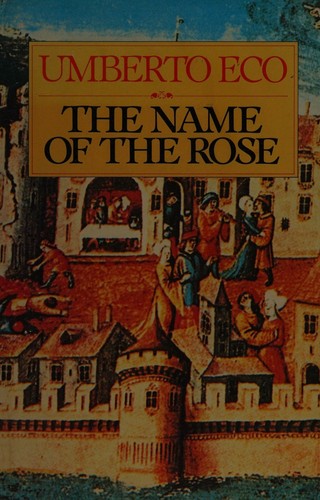
The Name of the Rose
Umberto Eco (1980)
“A medieval murder mystery that uses a monastery's burning library to ask whether knowledge should be controlled — written by the man who invented modern semiotics.”
The Name of the Rose— Summary & Analysis
by Umberto Eco · published 1980 · 536 pages · Postmodern
A user-friendly study guide for The Name of the Rose by Umberto Eco (1980): a high-level plot summary, full chapter-by-chapter analysis, theme breakdowns, character profiles, and 30 essay questions designed for college readers. Unlike a stock summary, sumsumsum.com adds a diction analysis drawn from Umberto Eco’s actual text, the 3 documented AP Literature exam appearances of this book, and reading-difficulty guidance (Moderate, 5/10) so students, teachers, and lifelong readers know what they are walking into.
“A medieval murder mystery that uses a monastery's burning library to ask whether knowledge should be controlled — written by the man who invented modern semiotics.”
Short Summary
In 1327, the Franciscan friar William of Baskerville and his novice Adso of Melk arrive at a wealthy Benedictine abbey in northern Italy to prepare for a theological debate. Seven monks die in seven days, each death linked to a forbidden book — Aristotle's lost second volume of the Poetics, on comedy and laughter. William unravels the labyrinthine library's secrets and identifies Jorge of Burgos, a blind elder monk, as the killer. Jorge has poisoned the book's pages to prevent anyone from reading Aristotle's defense of laughter, which he believes would undermine the authority of the Church. In the final confrontation, Jorge eats the poisoned pages and sets the library ablaze. The greatest collection of knowledge in Christendom burns to ash. Adso narrates the story decades later, an old man who has learned that the pursuit of signs leads only to more signs, never to final truth.
Detailed Summary
The novel opens with a layered manuscript conceit: a narrator discovers a medieval Latin text attributed to one Adso of Melk, who recorded events from his youth in November 1327. The elderly Adso recounts how, as a young Benedictine novice, he accompanied the English Franciscan William of Baskervill...
Chapter-by-Chapter Analysis
If you liked The Name of the Rose, read next
Start with The Library of Babel (Ficciones) by Jorge Luis Borges — The direct ancestor — Borges's infinite library and labyrinthine epistemology are the foundations Eco builds on, then politicizes. Then try The Hound of the Baskervilles by Arthur Conan Doyle — The explicit detective template — William IS Holmes, Adso IS Watson, but Eco's version dismantles the genre's promise that reason restores order. Or pivot to Blindness by Jose Saramago — Another allegory of institutional collapse and the fragility of civilization, told through sensory deprivation rather than intellectual labyrinth.