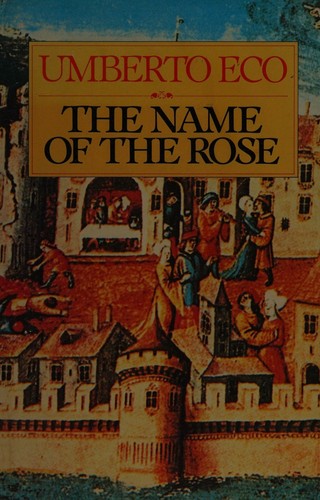
The Name of the Rose
Umberto Eco (1980)
“A medieval murder mystery that uses a monastery's burning library to ask whether knowledge should be controlled — written by the man who invented modern semiotics.”
For Students
Because this is the rare novel that makes you smarter for having read it — not in a medicinal, eat-your-vegetables way, but because its central mystery is genuinely exciting and its resolution genuinely disturbing. You will learn how medieval monks actually lived, how the Inquisition actually operated, and how the books we read today survived a thousand years of deliberate destruction. You will also learn, without realizing it, how signs work — how we read the world by interpreting clues, and why that process is never as reliable as we want it to be.
For Teachers
The novel supports analysis at every level: as historical fiction (the Franciscan poverty debate is impeccably researched), as detective fiction (the locked-room mystery is classically constructed), as philosophical fiction (the William-Jorge debate is a genuine philosophical argument), and as metafiction (the manuscript-within-a-manuscript frame raises questions about textual authority). The density rewards rereading; the plot rewards first reading. It works for courses in medieval studies, literary theory, philosophy, and comparative literature.
Why It Still Matters
Every debate about content moderation, banned books, algorithm-controlled information access, and institutional control of knowledge is a modern version of the debate between William and Jorge. Who decides what you are allowed to read? Who controls the labyrinth? The library has become the internet, but the question of who holds the keys has not changed. Jorge's argument — that unrestricted access to ideas will destabilize social order — is made every day by governments, corporations, and platforms. William's counter — that truth maintained by suppression is not truth but power — is the argument of every free-speech advocate, every librarian, every teacher who assigns a challenged book.