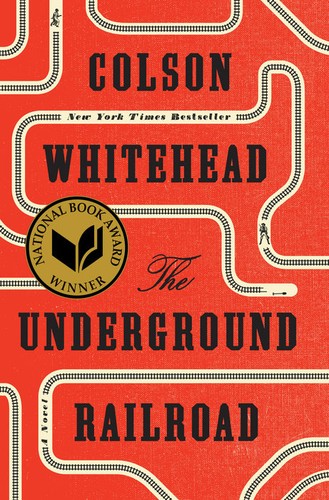
The Underground Railroad
Colson Whitehead (2016)
“America reimagined as a series of nightmares — each state a different way the same country has always found to destroy Black lives.”
At a Glance
Cora, a young enslaved woman on a Georgia cotton plantation, flees north with a man named Caesar, discovering that the Underground Railroad is a literal subterranean network of tunnels and trains. Each state she passes through — South Carolina, North Carolina, Tennessee, Indiana — presents a different vision of American racism: medical experimentation, genocide, violent suppression, and liberal paternalism that ultimately fails her. Hunted by the relentless slave catcher Arnold Ridgeway, Cora fights to survive a country that has declared her property. The novel ends with Cora moving west, toward an unknown freedom, having survived everything America could build to stop her.
Read full summary →Why This Book Matters
Won both the Pulitzer Prize and the National Book Award in 2016 — only the second novel in history to win both simultaneously (after The Color Purple). Became one of the most discussed American novels of the decade, debated as both a work of literary art and a political document. Amazon adapted it as a 10-episode series directed by Barry Jenkins in 2021. Regularly cited in discussions of the neo-slave narrative and of how fiction can address history that nonfiction cannot fully contain.
Diction Profile
Formally plain — short to medium sentences, Latinate vocabulary used sparingly, no ornament for ornament's sake. The restraint IS the style.
Low to medium