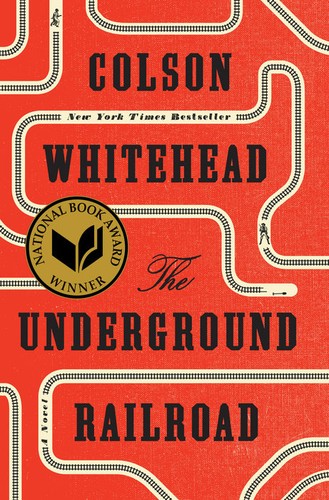
The Underground Railroad
Colson Whitehead (2016)
“America reimagined as a series of nightmares — each state a different way the same country has always found to destroy Black lives.”
Language Register
Formally plain — short to medium sentences, Latinate vocabulary used sparingly, no ornament for ornament's sake. The restraint IS the style.
Syntax Profile
Whitehead's sentences average 12-15 words — shorter than most literary fiction, closer to Carver than Faulkner. He uses compound sentences sparingly and prefers simple declarative constructions. Violence is described in the same sentence structure as weather or meals. The effect is a prose that refuses to rank experience: a man's death and the description of a plantation supper receive the same syntactic weight.
Figurative Language
Low to medium — Whitehead avoids decoration. His figurative language tends toward extended metaphor (the Railroad itself) and deliberate structural irony (the museum, the Festivals) rather than sentence-level imagery. When similes appear, they are plain and physical, never reaching for poetry.
Era-Specific Language
Plantation-era term for slave patrol — whites who policed roads for runaways, precursor to formal police forces
Railroad terminology applied to those who shelter freedom-seekers — Whitehead's literalization of the metaphor
Period euphemism for slavery — Whitehead uses it once, drily, to expose the euphemism as obscenity
Legal status distinction — free Black people versus enslaved, with all the precarity and documentation the status required
Railroad term made literal — Whitehead's central metaphorical-to-actual conversion
How Characters Speak — Class & Identity
Cora
Limited dialogue, careful observation, interior restraint — she watches more than she speaks. Her interiority is guarded because interiority was a luxury the plantation punished.
Survival mode internalized as personality. Cora's terseness is not inarticulate — it is disciplined. The novel gradually opens her up, rewarding trust with slightly more disclosure.
Ridgeway
Formal, ideological, declarative — uses complete sentences and philosophical abstraction. Speaks of Black people in the third person even in their presence.
His language performs certainty. He has answers for everything because the ideology gives him answers. The grammar of his speech is the grammar of power — he is always the subject, never the object.
Martin / Ethel
Martin: nervous, hedging, full of qualifications. Ethel: declarative in her fantasies, fragmented in her fears. Both speak in the register of people who believe they are good.
The language of liberal complicity — people who use the right words while doing the wrong things, or failing to do anything at all.
Royal
Warm, direct, idealistic — speaks in full sentences without Ridgeway's formality or Cora's guardedness. The only character who uses the language of the future tense without irony.
Royal believes in something. His language is the novel's most hopeful register, which is why his death is the novel's most affectively devastating.
Narrator's Voice
Third-person limited, rotating between Cora and occasional other perspectives (Ridgeway, Caesar, Mabel, Ethel, Royal). The narrator maintains clinical distance even in scenes of extreme violence — never editorializing, never indicating how the reader should feel. This is the opposite of sentimental abolitionist literature: Whitehead refuses to coach the reader's emotional response, trusting the facts themselves.
Tone Progression
Georgia
Documentary, severe, almost archival
Plantation life recorded as inventory. The prose has the affect of a ledger — which is historically what it was.
South Carolina / North Carolina
Quietly horrifying — false warmth then pure dread
South Carolina allows the prose to almost relax before the horror reasserts. North Carolina is claustrophobic, breathless.
Ridgeway / Tennessee
Ideological, apocalyptic, airless
Ridgeway's sections are the most formally philosophically dense. Tennessee is ash and fever.
Indiana / Mabel
Briefly warm, then elegiac, then quietly hopeful
The novel allows itself tenderness at Valentine Farm before taking it away. The Mabel revelation is the novel's emotional apex. The final pages are not triumphant — they are simply open.
Stylistic Comparisons
- Toni Morrison's Beloved — the neo-slave narrative predecessor; Morrison's prose is more hallucinatory and mythic where Whitehead's is spare and realist
- Kazuo Ishiguro's Never Let Me Go — the magical-realist conceit introduced matter-of-factly, never explained, used to illuminate institutional cruelty
- Cormac McCarthy's The Road — similarly flat prose in the face of catastrophe, similarly refusing to sentimentalize survival
Key Vocabulary from This Book
Notable words used in this text — click to see full definitions