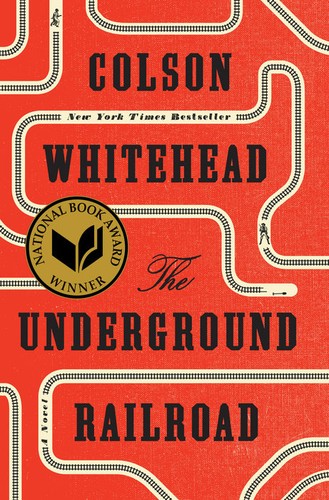
The Underground Railroad
Colson Whitehead (2016)
“America reimagined as a series of nightmares — each state a different way the same country has always found to destroy Black lives.”
For Students
Because it does something most historical fiction doesn't: it tells you the truth about American history by refusing to let you place it safely in the past. Every state Cora passes through is also the present. The spare prose means you can't hide behind beautiful sentences — the facts are stated plainly and you have to sit with them. And at 306 pages, it's the rare serious novel you can actually finish in a week.
For Teachers
The state-by-state structure makes it ideal for unit design — each section introduces a new form of American racism, allowing cumulative analysis. The Ridgeway chapters provide an ideological counterpoint to Cora's experience, and the Mabel reveal offers a model of how structural withholding can create emotional impact. The diction is accessible without being simple, and every chapter rewards close reading at the sentence level.
Why It Still Matters
The Underground Railroad is about the infrastructure of freedom — who builds it, who destroys it, who gets to use it, and what it costs. That question hasn't gone away. Every chapter describing a state that promises help but delivers surveillance (South Carolina), or a state that has simply expelled the problem (North Carolina), describes something that is happening now. Whitehead's genius is that he sets the novel in the past and you spend the whole time reading about the present.