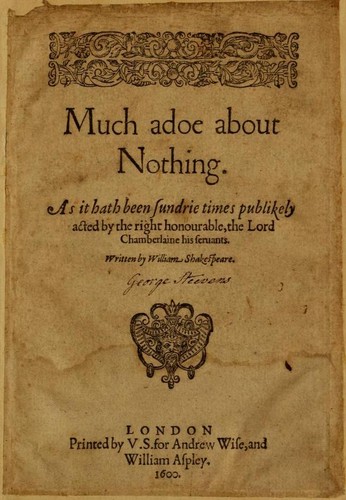
Much Ado About Nothing
William Shakespeare (1599)
“Shakespeare's sharpest romantic comedy asks whether the people who mock love the loudest are the ones who need it most.”
At a Glance
Soldiers return from war to Messina, where the witty Beatrice and Benedick wage a war of words while denying their mutual attraction. Their friends conspire to trick each pair into confessing love. Meanwhile, the young lovers Hero and Claudio face a darker plot: the villainous Don John fabricates evidence of Hero's infidelity, leading Claudio to publicly shame her at the altar. Hero feigns death, the bumbling constable Dogberry accidentally uncovers the conspiracy, and all is set right. The play ends with two weddings and the arrest of Don John, but the damage of slander lingers beneath the celebration.
Read full summary →Why This Book Matters
Much Ado About Nothing is the foundational text of the romantic comedy as we know it. The formula it establishes -- two people who obviously belong together but cannot admit it, forced into revelation through the interference of friends, complications, and their own stubbornness -- is the template for virtually every romantic comedy written since. From Pride and Prejudice to When Harry Met Sally, the Beatrice-Benedick dynamic is the pattern. It is also Shakespeare's most modern play in its treatment of gender: Beatrice's anger at the structural powerlessness of women, expressed in language that feels contemporary four centuries later, makes it a text that speaks directly to ongoing conversations about gender, power, and voice.
Diction Profile
Predominantly prose -- the most prose-heavy play in the Shakespeare canon. Verse appears for serious emotional moments and formal ceremonies, but the play's center of gravity is conversational, rapid, and intellectually competitive.
Moderate but precisely targeted. The play's central image clusters: war/combat (love as battle, wit as weaponry), disease/infection (slander as poison that spreads through a community), appearance/surface (oranges rotten inside, masked faces, veiled brides). Shakespeare uses fewer extended metaphors than in the tragedies but deploys individual images with surgical effect -- 'rotten orange,' 'Kill Claudio,' 'taming my wild heart.'