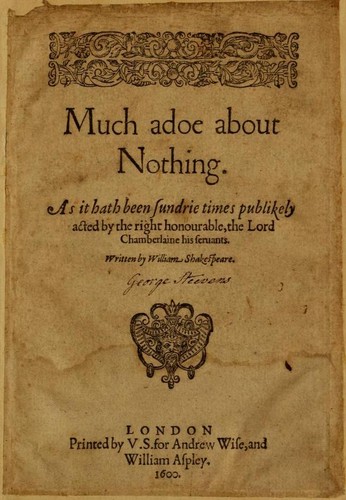
Much Ado About Nothing
William Shakespeare (1599)
“Shakespeare's sharpest romantic comedy asks whether the people who mock love the loudest are the ones who need it most.”
Similar Books
Thematic connections across eras and genres — books that talk to each other.
Pride and Prejudice
Jane Austen
Elizabeth Bennet and Darcy are the direct descendants of Beatrice and Benedick -- two brilliant people whose pride and wit prevent them from admitting attraction until external events force honesty. Austen acknowledged the debt.
Othello
William Shakespeare
Shakespeare's tragedy of slander and sexual jealousy, written a few years later with the same basic plot: a man deceived into believing a woman is unfaithful. Much Ado is the comic version; Othello is what happens when the truth arrives too late.
The Taming of the Shrew
William Shakespeare
Shakespeare's earlier battle-of-the-sexes comedy, but where Shrew's Katherine is 'tamed' into submission, Beatrice retains her wit and agency. Much Ado is Shakespeare revising his own gender politics.
Romeo and Juliet
William Shakespeare
Romeo and Juliet love at first sight and die for it; Beatrice and Benedick resist love and survive. The two plays are mirror images of Shakespeare's argument about whether passion or friendship is the better foundation for love.
The Crucible
Arthur Miller
Miller's play about false accusation destroying lives in a community primed to believe the worst. The structural dynamics -- public accusation, insufficient evidence, social pressure overriding truth -- mirror Hero's shaming in a different historical context.
Hamlet
William Shakespeare
Both plays are obsessed with the gap between appearance and reality, the reliability of evidence, and the damage done by believing what you are told rather than what you can verify. Hamlet thinks too much to act; Claudio acts without thinking at all.