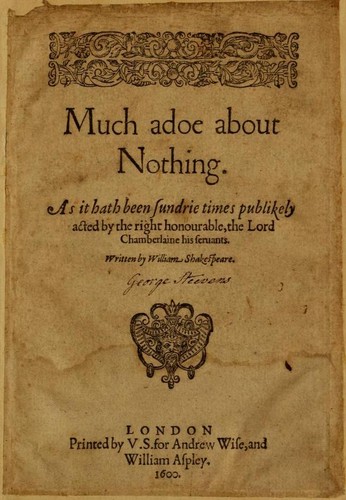
Much Ado About Nothing
William Shakespeare (1599)
“Shakespeare's sharpest romantic comedy asks whether the people who mock love the loudest are the ones who need it most.”
Much Ado About Nothing— Summary & Analysis
by William Shakespeare · published 1599 · 80 pages · Renaissance / Elizabethan
A user-friendly study guide for Much Ado About Nothing by William Shakespeare (1599): a high-level plot summary, full chapter-by-chapter analysis, theme breakdowns, character profiles, and 30 essay questions designed for high-school, ap-english, college readers. Unlike a stock summary, sumsumsum.com adds a diction analysis drawn from William Shakespeare’s actual text, the 5 documented AP Literature exam appearances of this book, and reading-difficulty guidance (Easy, 2/10) so students, teachers, and lifelong readers know what they are walking into.
“Shakespeare's sharpest romantic comedy asks whether the people who mock love the loudest are the ones who need it most.”
Short Summary
Soldiers return from war to Messina, where the witty Beatrice and Benedick wage a war of words while denying their mutual attraction. Their friends conspire to trick each pair into confessing love. Meanwhile, the young lovers Hero and Claudio face a darker plot: the villainous Don John fabricates evidence of Hero's infidelity, leading Claudio to publicly shame her at the altar. Hero feigns death, the bumbling constable Dogberry accidentally uncovers the conspiracy, and all is set right. The play ends with two weddings and the arrest of Don John, but the damage of slander lingers beneath the celebration.
Detailed Summary
Don Pedro, Prince of Aragon, returns victorious from a military campaign to the city of Messina, accompanied by his officers Claudio and Benedick, and his illegitimate brother Don John. They are guests of the governor Leonato, whose daughter Hero and niece Beatrice await them. Two love stories begi...
Chapter-by-Chapter Analysis
If you liked Much Ado About Nothing, read next
Start with Pride and Prejudice by Jane Austen — Elizabeth Bennet and Darcy are the direct descendants of Beatrice and Benedick -- two brilliant people whose pride and wit prevent them from admitting attraction until external events force honesty. Austen acknowledged the debt.. Or pivot to The Crucible by Arthur Miller — Miller's play about false accusation destroying lives in a community primed to believe the worst. The structural dynamics -- public accusation, insufficient evidence, social pressure overriding truth -- mirror Hero's shaming in a different historical context..
More from William Shakespeare and the scholars who study Shakespeare
Other works by William Shakespeare: A Midsummer Night's Dream (1596, 80 pages), As You Like It (1599, 80 pages), Hamlet (1600, 120 pages), Henry V (1599, 90 pages). Reading two or three of these in sequence reveals William Shakespeare’s recurring obsessions and stylistic signatures more clearly than any single book can.
The standard scholarly entry points to William Shakespeare’s work: Stephen Greenblatt (Harvard, Cogan University Professor) — Will in the World (2004); Harold Bloom (Yale, Sterling Professor) — Shakespeare: The Invention of the Human (1998); James Shapiro (Columbia, Larry Miller Professor) — 1599: A Year in the Life of Shakespeare (2005). These are the works graduate seminars cite when teaching William Shakespeare.