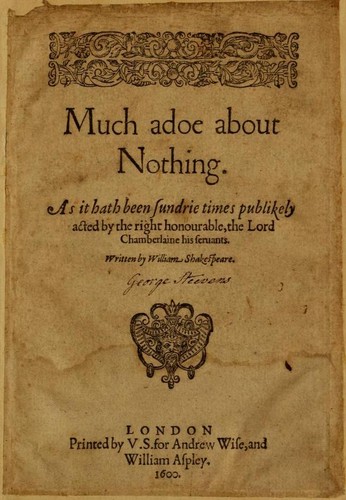
Much Ado About Nothing
William Shakespeare (1599)
“Shakespeare's sharpest romantic comedy asks whether the people who mock love the loudest are the ones who need it most.”
Much Ado About Nothing— Literary & Historical Significance
Why This Book Matters
Much Ado About Nothing is the foundational text of the romantic comedy as we know it. The formula it establishes -- two people who obviously belong together but cannot admit it, forced into revelation through the interference of friends, complications, and their own stubbornness -- is the template for virtually every romantic comedy written since. From Pride and Prejudice to When Harry Met Sally, the Beatrice-Benedick dynamic is the pattern. It is also Shakespeare's most modern play in its treatment of gender: Beatrice's anger at the structural powerlessness of women, expressed in language that feels contemporary four centuries later, makes it a text that speaks directly to ongoing conversations about gender, power, and voice.
Firsts & Innovations
Established the 'bickering couple who secretly love each other' as the central romantic comedy archetype
Created the first female character in English drama whose wit is presented as superior to the male lead's -- Beatrice consistently wins the exchanges
Pioneered the comic 'overhearing' plot structure that would dominate comedy for centuries
Dogberry is the prototype of every well-meaning but incompetent authority figure in comedy, from Inspector Clouseau to Michael Scott
Cultural Impact
The Beatrice-Benedick dynamic became the template for the 'screwball comedy' genre of the 1930s-40s and every romantic comedy since
Kenneth Branagh's 1993 film brought the play to mainstream audiences and became one of the most commercially successful Shakespeare adaptations
Beatrice's 'O that I were a man!' speech is frequently cited in feminist criticism as Shakespeare's clearest articulation of gendered power imbalance
The phrase 'much ado about nothing' entered common English as an idiom for unnecessary fuss -- though the play itself argues the 'nothing' is anything but
Joss Whedon's 2012 low-budget film adaptation demonstrated the play's contemporary accessibility -- shot in modern dress in a private home
The play is among the most frequently performed Shakespeare comedies worldwide, with productions regularly updating its gender politics for modern audiences
Banned & Challenged
Much Ado About Nothing has not been banned but has been regularly bowdlerized. Victorian productions cut Margaret's bawdy jokes, softened Beatrice's aggression, and shortened the shaming scene to reduce its violence. Many school editions historically excised the sexual humor (particularly the jokes about cuckoldry and horns) and downplayed the play's anger at patriarchal honor culture. The play's frank treatment of slander, sexual reputation, and gendered violence has made it occasionally controversial in educational settings.