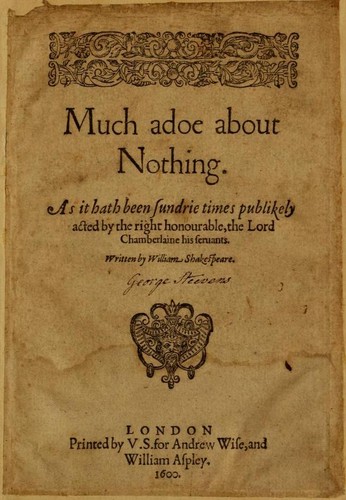
Much Ado About Nothing
William Shakespeare (1599)
“Shakespeare's sharpest romantic comedy asks whether the people who mock love the loudest are the ones who need it most.”
Characters in Much Ado About Nothing
by William Shakespeare · 1599 · 7 characters analyzed
Cast: Beatrice, Benedick, Hero, Claudio, Dogberry, Don John, Don Pedro.
Character Analysis
The most verbally brilliant woman in Shakespeare. Beatrice uses wit as armor against vulnerability -- she mocks love because she fears it, attacks Benedick because she is drawn to him, and maintains a posture of independence that is both genuine conviction and defensive performance. But the shaming of Hero strips away the comedy and reveals what the wit has been protecting: a fierce moral core. Her 'Kill Claudio' is not hysteria; it is the most clear-eyed assessment of the situation anyone in the play makes. She sees that in a world where men's words destroy women's lives, only men's actions can repair them. She cannot fight; she must delegate her rage. That structural powerlessness, articulated with devastating clarity, makes her the play's moral center.
Brilliant, aggressive prose full of puns, inversions, and competitive one-upmanship. Shifts to verse only once -- when the shaming of Hero forces sincerity.
Benedick begins as a standard comic bachelor -- swearing off love, mocking marriage, performing misogyny as social entertainment. The gulling trick strips away his defenses with embarrassing speed, revealing that his resistance was always fear of rejection. But his real transformation comes not from admitting love but from acting on it. When Beatrice demands 'Kill Claudio,' Benedick must choose between male loyalty and moral truth. He chooses Beatrice -- not because she is his lover but because she is right. His willingness to challenge his closest friend on behalf of a wronged woman is the play's most significant act of moral courage.
Equally witty prose, but with more self-aware asides and soliloquies. His language tracks his transformation: defensive wit to comic self-contradiction to genuine moral seriousness.
Hero speaks fewer lines than almost any other major character in Shakespeare. She is obedient, conventional, and nearly silent -- and this is the point. She is the play's test case for what patriarchal culture does to women who follow its rules perfectly. Hero does everything right: she is modest, chaste, dutiful to her father, compliant with her suitor. None of it protects her. She is destroyed by a lie she cannot answer, defended only when she is presumed dead, and restored without ever being allowed to express her own anger. Her silence in the final scene -- she barely speaks at her own wedding -- is either Shakespeare's failure or his most devastating commentary.
Very few lines -- among the least-speaking title-adjacent characters in Shakespeare. Speaks mostly in verse, mostly to confirm what others have said.
The play's most divisive character. Claudio is young, conventional, and fatally credulous. He falls in love with Hero's appearance, believes Don John's slander without investigation, and chooses public humiliation over private inquiry. His shaming of Hero is the play's worst act. And yet Shakespeare never treats him as a villain -- he is a young man operating entirely within the logic of his honor culture, doing what that culture tells him is correct. His inadequate penance and instant forgiveness raise the question Shakespeare leaves deliberately open: is Claudio redeemable, or is he simply the system working as designed?
Stiff, conventional verse about Hero's beauty. Shifts to harsh, commercial prose in the shaming scene ('rotten orange'). Very few lines that feel emotionally specific.
The most hilariously incompetent officer of the law in English literature. Dogberry mangles every word, inverts every instruction, and conducts the worst interrogation ever staged. But he catches the villain. His watch, despite following his absurd orders, overhears Borachio's confession and makes the arrest that saves Hero. Shakespeare uses Dogberry to make a structural argument about language and power: the truth is available, but it is trapped inside a man whose social class and verbal incompetence prevent him from being heard by the people who need to hear it. Dogberry has the facts; he lacks the diction.
Malapropism-dense prose where every important word is the wrong word. 'Comprehend' for 'apprehend,' 'dissembly' for 'assembly,' 'aspicious' for 'suspicious.'
Shakespeare's thinnest villain -- and deliberately so. Don John has no Iago-level psychology, no complex motive, no seductive charm. He is 'a plain-dealing villain' who hates happiness because he can. His thinness is the point: the slander plot does not require a brilliant antagonist because the honor system does most of the work. Don John provides the lie; Claudio's credulity, Don Pedro's complicity, and Leonato's shame do the rest. The villain barely matters in a world this eager to believe the worst about women.
Don Pedro occupies an uncomfortable position: he is the play's highest-ranking character, the architect of the benevolent gulling plot, and a willing participant in the malevolent shaming. He matchmakes Beatrice and Benedick with genuine warmth, then stands beside Claudio and confirms the false accusation against Hero without independent investigation. He is neither villain nor hero but something more troubling -- a man of authority and goodwill who is nonetheless complicit in injustice because his social position makes him confident in his own judgment.