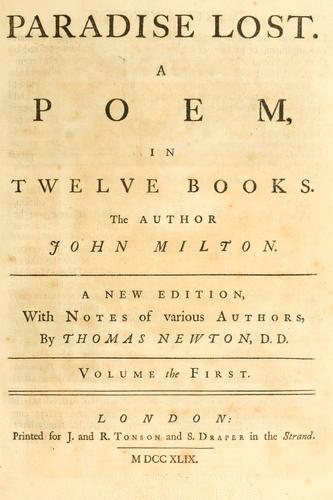
Paradise Lost
John Milton (1667)
“The poem that made Satan the most compelling character in English literature — and then asked whether you were wrong to find him compelling.”
Characters in Paradise Lost
by John Milton · 1667 · 7 characters analyzed
Cast: Satan, Adam, Eve, God the Father, The Son of God, Raphael, Abdiel.
Character Analysis
The most influential villain in English literature. Satan opens the poem as a figure of titanic grandeur — defeated but unbroken, his rhetoric magnificent, his defiance thrilling. 'Better to reign in Hell than serve in Heaven' sounds like the anthem of every revolutionary who ever lived. But Milton systematically degrades Satan across twelve books: the cosmic rebel of Book I becomes the jealous voyeur of Book IV ('Myself am Hell'), the garden-sneaking saboteur of Book IX, and the involuntary serpent of Book X. His rhetoric never stops being beautiful, but the gap between what he says and what he is widens until it becomes the poem's central irony. Blake called Milton 'of the Devil's party without knowing it.' Stanley Fish argued the opposite: Milton knew exactly what he was doing, and the reader who admires Satan is being tested. The debate is unresolvable because Milton made it unresolvable — Satan is designed to be admired and then understood, in that order.
High epic register in public speeches (Books I-II) — Latinate, periodic, rhetorically overwhelming. Private soliloquies (Book IV) break into shorter, anguished syntax. The gap between public performance and private agony widens as the poem progresses.