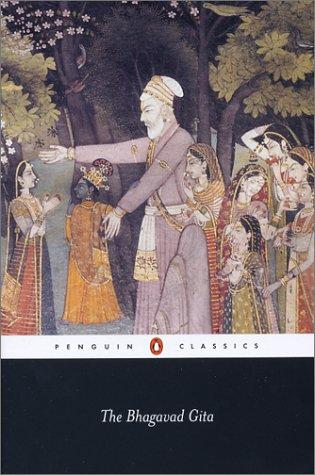
The Bhagavad Gita
Traditional (attributed to Vyasa, part of the Mahabharata) (-300)
“A warrior refuses to fight. A god explains why he must. Seven hundred verses that shaped how billions understand duty, death, and the meaning of action.”
At a Glance
On the battlefield of Kurukshetra, the warrior prince Arjuna refuses to fight a civil war against his own kinsmen. His charioteer, Krishna — revealed as the Supreme Being — delivers a philosophical dialogue across 18 chapters, teaching Arjuna that the soul is eternal, that action performed without attachment to results is the path to liberation, and that duty (dharma) must be fulfilled regardless of personal anguish. Arjuna resolves to fight.
Read full summary →Why This Book Matters
The Bhagavad Gita is arguably the single most influential text in Indian civilization — the closest analogue to what the Bible is in Western culture or the Quran in Islamic culture, though it functions differently from either. It has been continuously commented upon for over two thousand years, with major philosophical commentaries by Shankara (8th century), Ramanuja (11th century), and Madhva (13th century), each deriving a different metaphysical system from the same 700 verses. Its global influence accelerated through translation: Charles Wilkins's 1785 English version was the first direct Sanskrit-to-English translation of any Indian text and sparked the European Romantic fascination with Eastern philosophy.
Diction Profile
Elevated philosophical discourse rendered in metrical verse — the Sanskrit is simultaneously hymn, argument, and divine speech
High