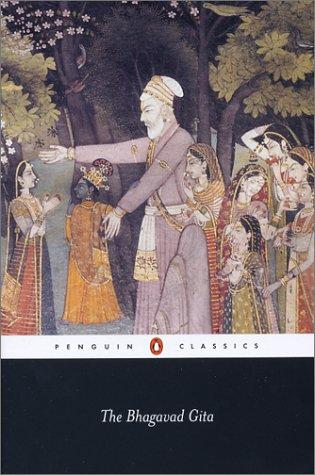
The Bhagavad Gita
Traditional (attributed to Vyasa, part of the Mahabharata) (-300)
“A warrior refuses to fight. A god explains why he must. Seven hundred verses that shaped how billions understand duty, death, and the meaning of action.”
For Students
Because the Gita is one of the foundational texts of world philosophy, and you cannot understand Indian civilization, comparative religion, or the history of ideas without it. It asks the question every person eventually faces — 'What should I do when my duty conflicts with my feelings?' — and answers it with a sophistication that 2,500 years of commentary have not exhausted. At 100 pages, it is short enough to read in a day and dense enough to study for a lifetime.
For Teachers
The Gita is ideal for courses in world literature, comparative philosophy, and ethics. The dialogue form invites classroom discussion — students can take positions on whether Krishna's arguments are persuasive. The three-yoga framework provides a clear structural scaffold. The Oppenheimer connection bridges ancient philosophy and modern history. And the interpretive tradition (Shankara vs. Ramanuja vs. Gandhi vs. Ambedkar) demonstrates that great texts generate not consensus but productive disagreement.
Why It Still Matters
Every person who has ever been paralyzed by a difficult decision — do I take the job or follow my passion? do I fight or walk away? do I do what's expected or what feels right? — is standing on Arjuna's battlefield. The Gita does not give easy answers, but it provides a framework for thinking about duty, action, and meaning that remains as relevant in the age of career anxiety and moral relativism as it was on the plains of Kurukshetra.