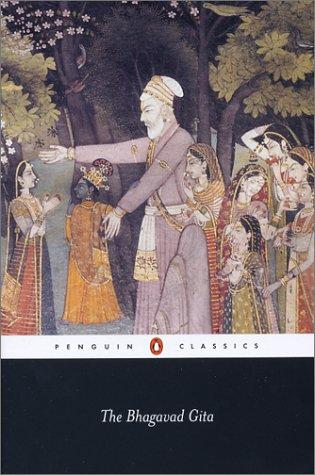
The Bhagavad Gita
Traditional (attributed to Vyasa, part of the Mahabharata) (-300)
“A warrior refuses to fight. A god explains why he must. Seven hundred verses that shaped how billions understand duty, death, and the meaning of action.”
The Bhagavad Gita— Historical Context & Author Background
Author: Traditional (attributed to Vyasa, part of the Mahabharata) · Published -300· Era: Ancient Indian / Classical Sanskrit·100 pages
Themes explored: duty, action, devotion, knowledge, detachment, dharma, self, yoga, cosmic-order
About Traditional (attributed to Vyasa, part of the Mahabharata)
The Bhagavad Gita is traditionally attributed to Vyasa, the legendary compiler of the Vedas and author of the Mahabharata. Historical scholarship dates the text to approximately the 5th-2nd century BCE, a period of intense philosophical ferment in India when the Upanishads, early Buddhism, and Jainism were all competing for intellectual authority. The Gita is best understood not as the work of a single author but as a synthesis — possibly composed over several centuries — that absorbed and reconciled multiple philosophical and devotional traditions into a single dialogue. Its placement within the Mahabharata (the world's longest epic poem at roughly 1.8 million words) gives it a narrative context that pure philosophical treatises lack.
Life → Text Connections
How Traditional (attributed to Vyasa, part of the Mahabharata)'s real experiences shaped specific elements of The Bhagavad Gita.
The Gita emerged during a period when the ritualistic Vedic tradition was being challenged by the contemplative Upanishads and the renunciant movements of Buddhism and Jainism
The text's insistence that liberation can be achieved through action in the world (not only renunciation) is a direct response to Buddhist and Jain emphasis on withdrawal
The Gita's philosophical position — that you can transcend the world while living in it — was a revolutionary synthesis that preserved Vedic social order while absorbing contemplative insights.
The Mahabharata depicts a devastating civil war that may reflect actual conflicts during the transition from Vedic to classical Indian civilization
The battlefield setting is both literal (a war is about to happen) and allegorical (every person faces moments where duty and desire collide)
The Gita's genius is making a specific historical crisis into a universal human predicament. The war is real AND symbolic — and the text never forces you to choose.
The Gita was likely composed after the early Upanishads but before the full development of the six classical schools of Hindu philosophy
It contains elements of Samkhya metaphysics (the gunas, purusha/prakriti), Yoga psychology (meditation practice), and Vedanta theology (Brahman, atman) without fully systematizing any of them
The Gita is a pre-systematic synthesis — it draws from multiple traditions without reducing itself to any single school. This is why every subsequent school could claim it as support.
The text was preserved through oral transmission for centuries before being written down, shaped by generations of reciters and commentators
The verse form (anushtubh meter) is designed for memorization and oral performance, not silent reading
The Gita was meant to be heard, not read. Its rhythmic structure, repetitions, and mnemonic patterns reflect a culture where scripture lived in the voice, not on the page.
Historical Era
Late Vedic / Early Classical India, approximately 5th-2nd century BCE
How the Era Shapes the Book
The Gita is a product of philosophical crisis. The old Vedic religion of ritual sacrifice was losing authority. Buddhism and Jainism offered radical alternatives — renounce the world entirely. The Gita's brilliance is its refusal to choose sides: it validates the insight of the renunciants (the material world is not ultimate reality) while defending engagement with worldly duties (you cannot escape action). This synthesis preserved Hindu social structure while absorbing the deepest insights of its critics. The result is a text that is simultaneously conservative (upholding dharma and social order) and revolutionary (declaring all souls equal before God regardless of caste or gender).
Why The Bhagavad Gita Matters Historically
The Bhagavad Gita is arguably the single most influential text in Indian civilization — the closest analogue to what the Bible is in Western culture or the Quran in Islamic culture, though it functions differently from either. It has been continuously commented upon for over two thousand years, with major philosophical commentaries by Shankara (8th century), Ramanuja (11th century), and Madhva (13th century), each deriving a different metaphysical system from the same 700 verses. Its global influence accelerated through translation: Charles Wilkins's 1785 English version was the first direct Sanskrit-to-English translation of any Indian text and sparked the European Romantic fascination with Eastern philosophy.
- First major text to systematize the three paths to liberation (karma, jnana, bhakti yoga) within a single framework
- First text to articulate the avatar doctrine — God's cyclical incarnation to restore cosmic order
- One of the earliest philosophical works to argue that spiritual liberation is accessible regardless of caste, gender, or social position
- First Indian text translated directly into a European language (Wilkins, 1785), opening two centuries of cross-cultural philosophical exchange
The Gita has been the subject of legal controversy rather than formal banning. A Russian court considered banning Prabhupada's 'Bhagavad Gita As It Is' in 2011, provoking international outcry. In India, Dalit (formerly 'untouchable') critics including B.R. Ambedkar have challenged the text's relationship to caste hierarchy, arguing that its affirmation of varnashrama dharma provides religious justification for social inequality. The debate is ongoing and legitimate — the same text that declares spiritual equality also describes a divinely ordained social hierarchy.