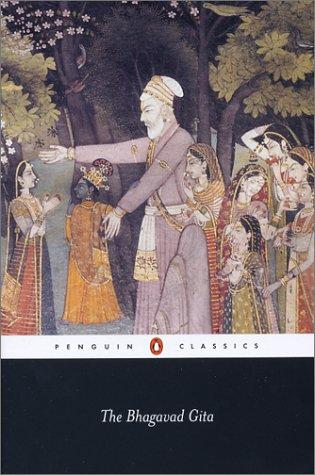
The Bhagavad Gita
Traditional (attributed to Vyasa, part of the Mahabharata) (-300)
“A warrior refuses to fight. A god explains why he must. Seven hundred verses that shaped how billions understand duty, death, and the meaning of action.”
Why This Book Matters
The Bhagavad Gita is arguably the single most influential text in Indian civilization — the closest analogue to what the Bible is in Western culture or the Quran in Islamic culture, though it functions differently from either. It has been continuously commented upon for over two thousand years, with major philosophical commentaries by Shankara (8th century), Ramanuja (11th century), and Madhva (13th century), each deriving a different metaphysical system from the same 700 verses. Its global influence accelerated through translation: Charles Wilkins's 1785 English version was the first direct Sanskrit-to-English translation of any Indian text and sparked the European Romantic fascination with Eastern philosophy.
Firsts & Innovations
First major text to systematize the three paths to liberation (karma, jnana, bhakti yoga) within a single framework
First text to articulate the avatar doctrine — God's cyclical incarnation to restore cosmic order
One of the earliest philosophical works to argue that spiritual liberation is accessible regardless of caste, gender, or social position
First Indian text translated directly into a European language (Wilkins, 1785), opening two centuries of cross-cultural philosophical exchange
Cultural Impact
Central scripture for over a billion Hindus — recited at ceremonies, studied in schools, sworn upon in Indian courts
Gandhi's 'spiritual dictionary' — his philosophy of non-violent resistance (satyagraha) drew directly from the Gita's teaching on desireless action
Thoreau and Emerson encountered it in the 1840s, and it profoundly shaped American Transcendentalism — Thoreau took it to Walden Pond
Oppenheimer quoted Chapter 11 ('I am become Death, the destroyer of worlds') after the Trinity nuclear test — permanently linking the Gita to modern consciousness of existential destruction
Aldous Huxley used it as a cornerstone of his 'perennial philosophy' — the idea that all religions share a common mystical core
T.S. Eliot wove Gita imagery into The Waste Land and Four Quartets, particularly the concept of detachment and the 'still point of the turning world'
The Hare Krishna movement (ISKCON, founded 1966) brought the Gita to Western popular culture through Prabhupada's widely distributed translation and commentary
Banned & Challenged
The Gita has been the subject of legal controversy rather than formal banning. A Russian court considered banning Prabhupada's 'Bhagavad Gita As It Is' in 2011, provoking international outcry. In India, Dalit (formerly 'untouchable') critics including B.R. Ambedkar have challenged the text's relationship to caste hierarchy, arguing that its affirmation of varnashrama dharma provides religious justification for social inequality. The debate is ongoing and legitimate — the same text that declares spiritual equality also describes a divinely ordained social hierarchy.