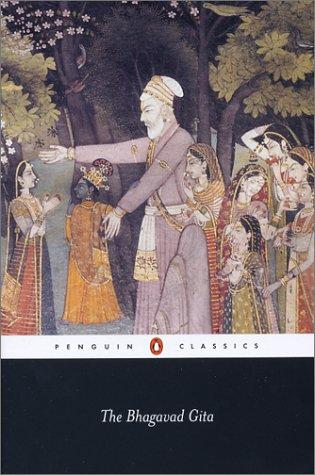
The Bhagavad Gita
Traditional (attributed to Vyasa, part of the Mahabharata) (-300)
“A warrior refuses to fight. A god explains why he must. Seven hundred verses that shaped how billions understand duty, death, and the meaning of action.”
Similar Books
Thematic connections across eras and genres — books that talk to each other.
Another ancient text using paradox and brevity to express the inexpressible — complementary Eastern philosophical traditions addressing the same questions of action, detachment, and the nature of reality
Meditations
Marcus Aurelius
A ruler's private philosophical journal on duty, death, and equanimity — Stoic detachment parallels the Gita's teaching on action without attachment
The Book of Job
Traditional (Hebrew Bible)
Another text where a suffering human confronts the divine and receives an answer that overwhelms rather than explains — cosmic perspective as response to human anguish
Siddhartha
Hermann Hesse
A Western novelist's encounter with Indian philosophy — the search for enlightenment through experience rather than teaching, directly engaging the Gita's world
Walden
Henry David Thoreau
Thoreau took the Gita to Walden Pond — his experiment in deliberate living is a direct response to the Gita's teaching on simplicity, detachment, and self-knowledge
Another foundational dialogue about duty, justice, and the nature of reality — Plato's philosopher-king shares structural parallels with the Gita's enlightened actor