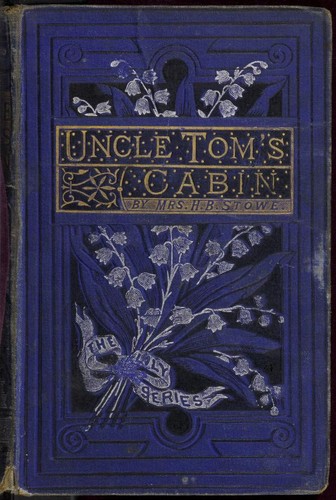
Uncle Tom's Cabin
Harriet Beecher Stowe (1852)
“The novel that Abraham Lincoln supposedly said started the Civil War — a sentimental masterpiece that weaponized empathy to dismantle the moral foundations of American slavery.”
At a Glance
Arthur Shelby, a Kentucky slaveholder in financial trouble, sells two enslaved people: Uncle Tom, a deeply religious middle-aged man, and Harry, the young son of Eliza Harris. Eliza flees north with Harry, eventually reuniting with her husband George and escaping to Canada. Tom is sold down the river — first to the kind but ineffectual Augustine St. Clare in New Orleans, where he bonds with the angelic child Eva, then after Eva's and St. Clare's deaths to the brutal Simon Legree on a Louisiana cotton plantation. Tom refuses to betray two escaped women and is beaten to death by Legree's overseers, dying as a Christian martyr. George Shelby arrives too late to save Tom but frees his own enslaved people in Tom's memory.
Read full summary →Why This Book Matters
Uncle Tom's Cabin was the bestselling novel of the nineteenth century, outsold only by the Bible in America during the 1850s. It sold 300,000 copies in its first year and over a million copies worldwide by 1853. Abraham Lincoln's reported greeting to Stowe — 'So you're the little woman who wrote the book that started this great war' — is apocryphal but captures a real truth: the novel transformed American public opinion on slavery more effectively than any political speech, sermon, or pamphlet. It was the first American novel to take slavery as its central subject and the first to achieve genuine mass cultural saturation, spawning theatrical adaptations ('Tom shows'), merchandise, songs, and a visual iconography that persisted for decades.
Diction Profile
Formal Victorian prose with heavy narrator intervention, alternating with phonetically rendered dialect for enslaved characters
Moderate