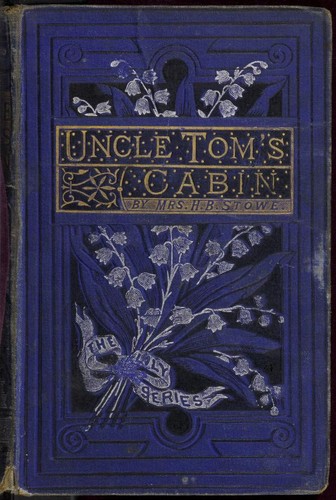
Uncle Tom's Cabin
Harriet Beecher Stowe (1852)
“The novel that Abraham Lincoln supposedly said started the Civil War — a sentimental masterpiece that weaponized empathy to dismantle the moral foundations of American slavery.”
Essay Questions & Food for Thought
30questions designed to challenge assumptions and provoke original thinking. These can't be answered from a summary — you need the actual text.
Lincoln supposedly told Stowe: 'So you're the little woman who wrote the book that started this great war.' Whether or not he said it, why has this quote endured? What does it reveal about how Americans understand the relationship between literature and political power?
The term 'Uncle Tom' is now a pejorative meaning a Black person who is subservient to white people. Read the actual character. Is this characterization fair to what Stowe wrote? What happened between the novel and the insult?
Stowe's primary rhetorical strategy is to ask white mothers to imagine their own children being sold into slavery. Why is this strategy so effective? What are its limitations as a moral argument?
Compare Tom's response to slavery (Christian endurance) with George Harris's response (armed resistance and escape). Does the novel privilege one over the other? Should it?
James Baldwin called Uncle Tom's Cabin a 'bad novel' that reduces Black people to 'theological abstractions.' Is he right? Can a politically important novel also be artistically flawed, and does the political importance excuse the artistic failures?
Miss Ophelia opposes slavery morally but is physically repulsed by Black people. St. Clare identifies this contradiction immediately. How does Stowe use Miss Ophelia to critique her own Northern readership?
Eva's death scene was the most culturally reproduced image of the nineteenth century. Why was a dying child the most politically effective image the abolitionist movement could deploy? What does this tell us about how sentimental culture processed moral arguments?
Stowe makes Simon Legree a Northern-born slaveholder. Why is this detail important to her argument? What Northern defense does it preemptively destroy?
Topsy says 'I spect I grow'd. Don't think nobody never made me' when asked who created her. What is the theological and political meaning of this statement? What has slavery done to Topsy's self-conception?
The novel uses a dual plot structure — Tom goes south, Eliza goes north. Why does Stowe need both plotlines? What would be lost if the novel only followed one?
George Harris's final decision is to emigrate to Liberia rather than remain in America. Frederick Douglass criticized this ending sharply. Why? What does the Liberia ending reveal about the limits of Stowe's racial imagination?
How does Stowe use dialect to differentiate her characters? What are the political implications of rendering enslaved characters' speech phonetically while allowing white characters to speak in standard English?
St. Clare argues that Northern factory workers are exploited just as ruthlessly as Southern enslaved people. Is this a valid comparison? Why does Stowe include this argument from a character she clearly doesn't fully endorse?
Cassy kills her own infant rather than let the child grow up enslaved. How does Stowe present this act? Is it murder, mercy, or resistance? Compare it to Toni Morrison's treatment of the same theme in Beloved.
The novel was serialized in a newspaper before being published as a book. How does this origin shape its structure — the episodic chapters, the cliffhangers, the direct addresses to the reader?
Stowe ends the novel by breaking the fictional frame and addressing the reader directly: 'And now, men and women of America, is this a thing to be trifled with?' Why does she abandon fiction at the end? What does this say about her faith in literature versus direct argument?
Tom's cabin appears at the beginning and end of the novel. What does it symbolize, and how does its meaning change between the opening and closing chapters?
How would Uncle Tom's Cabin be received if published today? Would its racial stereotypes disqualify it from serious consideration, or would its anti-racist intentions save it? Is intention sufficient?
Stowe's novel was more politically effective than Frederick Douglass's Narrative, which was a better work of literature. Why? What does this say about the relationship between artistic quality and political impact?
Tom forgives Sambo and Quimbo — the men who beat him to death — as he dies. Is this forgiveness heroic or problematic? Who benefits from the image of a Black man forgiving his murderers?
Eva and Tom share a spiritual bond that Stowe presents as transcending race. Does it? Or does the relationship reinforce racial hierarchy by positioning the white child as Tom's spiritual superior?
Stowe uses Christianity both as a defense of Tom's heroism and as a tool wielded by slaveholders to justify slavery. How does the novel distinguish between authentic and corrupted Christianity?
The 'Tom shows' — theatrical adaptations of the novel — often distorted Stowe's characters into minstrel stereotypes, turning Tom into a shuffling servant and Topsy into a clown. How does adaptation betray authorial intent, and is the author responsible for controlling how their work is used?
The novel features several light-skinned enslaved characters (George Harris, Eliza, Cassy) who are presented as more sympathetic, articulate, and 'civilized' than darker-skinned characters. What does this colorism reveal about Stowe's racial assumptions?
Compare Uncle Tom's Cabin to a modern viral social justice campaign. Both use emotional storytelling to build political will. What are the strengths and dangers of this approach?
Stowe published A Key to Uncle Tom's Cabin (1853) to document her sources and prove the novel's accuracy. Why did she feel the need to prove a work of fiction was true? What does this tell us about the novel's rhetorical strategy?
The Ohio River functions as the novel's central geographic symbol — the boundary between slavery and freedom. How does Stowe use the river, and what does it mean that the Fugitive Slave Act effectively erased this boundary?
Augustine St. Clare knows slavery is evil and does nothing. Is he a worse character than Simon Legree, who is evil but at least honest about it? Make the case for both sides.
Read the novel's last paragraph aloud. Stowe ends not with narrative but with a question to the reader. What is the effect of ending a novel with a demand rather than a resolution?
If Uncle Tom's Cabin is the most politically consequential novel in American history, why is it so rarely taught as a great work of literature? Is it possible for a book to be historically essential and aesthetically mediocre? Does that distinction matter?