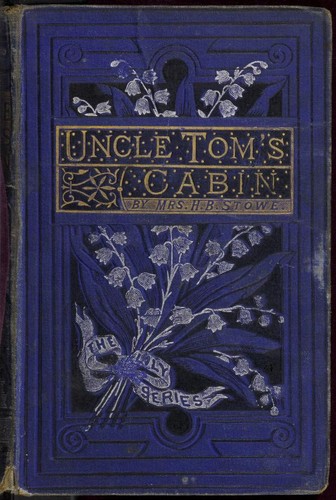
Uncle Tom's Cabin
Harriet Beecher Stowe (1852)
“The novel that Abraham Lincoln supposedly said started the Civil War — a sentimental masterpiece that weaponized empathy to dismantle the moral foundations of American slavery.”
This page prints on a single page. Use Ctrl+P / Cmd+P.
Uncle Tom's Cabin
Harriet Beecher Stowe (1852) · 530pages · Romantic / Antebellum · 3 AP appearances
Summary
Arthur Shelby, a Kentucky slaveholder in financial trouble, sells two enslaved people: Uncle Tom, a deeply religious middle-aged man, and Harry, the young son of Eliza Harris. Eliza flees north with Harry, eventually reuniting with her husband George and escaping to Canada. Tom is sold down the river — first to the kind but ineffectual Augustine St. Clare in New Orleans, where he bonds with the angelic child Eva, then after Eva's and St. Clare's deaths to the brutal Simon Legree on a Louisiana cotton plantation. Tom refuses to betray two escaped women and is beaten to death by Legree's overseers, dying as a Christian martyr. George Shelby arrives too late to save Tom but frees his own enslaved people in Tom's memory.
Why It Matters
Uncle Tom's Cabin was the bestselling novel of the nineteenth century, outsold only by the Bible in America during the 1850s. It sold 300,000 copies in its first year and over a million copies worldwide by 1853. Abraham Lincoln's reported greeting to Stowe — 'So you're the little woman who wrote ...
Themes & Motifs
Diction & Style
Register: Formal Victorian prose with heavy narrator intervention, alternating with phonetically rendered dialect for enslaved characters
Narrator: Omniscient, interventionist, and openly didactic. Stowe's narrator is not a character but a moral authority who addre...
Figurative Language: Moderate
Historical Context
1850s America — Antebellum period, Fugitive Slave Act, intensifying sectional crisis: The Fugitive Slave Act of 1850 was the novel's direct provocation. By requiring Northerners to participate in capturing escapees, the law destroyed the fiction that slavery was a distant Southern p...
Key Characters
Talking Points
- Lincoln supposedly told Stowe: 'So you're the little woman who wrote the book that started this great war.' Whether or not he said it, why has this quote endured? What does it reveal about how Americans understand the relationship between literature and political power?
- The term 'Uncle Tom' is now a pejorative meaning a Black person who is subservient to white people. Read the actual character. Is this characterization fair to what Stowe wrote? What happened between the novel and the insult?
- Stowe's primary rhetorical strategy is to ask white mothers to imagine their own children being sold into slavery. Why is this strategy so effective? What are its limitations as a moral argument?
- Compare Tom's response to slavery (Christian endurance) with George Harris's response (armed resistance and escape). Does the novel privilege one over the other? Should it?
- James Baldwin called Uncle Tom's Cabin a 'bad novel' that reduces Black people to 'theological abstractions.' Is he right? Can a politically important novel also be artistically flawed, and does the political importance excuse the artistic failures?
Notable Quotes
“The most dreadful part of slavery, to my mind, is its outrages on the feelings and affections — the separating of families.”
“If it were your Harry, mother, or your Willie, that were going to be torn from you by a brutal trader, how fast could you walk?”
“I ain't a critter. I'm a man as much as anybody.”
Why Read This
Because this novel changed the course of American history — literally. No other work of fiction has had a more direct political impact. Reading it teaches you how narrative empathy works as a political weapon, why sentimental fiction was the most ...