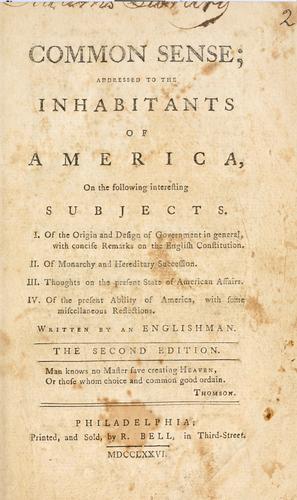
Common Sense
Thomas Paine (1776)
“A broke, self-taught immigrant writes 48 pages that convince an entire continent to declare independence — and publishes them anonymously because the argument matters more than the author.”
Similar Books
Thematic connections across eras and genres — books that talk to each other.
The Declaration of Independence
Thomas Jefferson
Written six months after Common Sense and deeply influenced by it — Jefferson formalized Paine's popular rhetoric into legal-philosophical language that became the founding document of the nation
Narrative of the Life of Frederick Douglass
Frederick Douglass
Douglass used the same revolutionary rhetoric against the institution Paine left unaddressed — turning America's founding language of liberty against its practice of slavery
Walden
Henry David Thoreau
Thoreau's civil disobedience descends directly from Paine's argument that citizens have the right and duty to resist unjust government
The Communist Manifesto
Karl Marx and Friedrich Engels
The most influential political pamphlet after Common Sense — same short form, same urgency, same argument that the current system must be replaced rather than reformed
Letter from Birmingham Jail
Martin Luther King Jr.
King's defense of direct action echoes Paine's argument that delay is cowardice and that unjust laws deserve no obedience — the civil rights movement's Common Sense
A Vindication of the Rights of Woman
Mary Wollstonecraft
Published sixteen years after Common Sense using the same Enlightenment logic — if hereditary power over colonies is unjust, hereditary power over women is equally so